An astrophysicist’s perspective on the universe’s sheer size reveals why human minds struggle to comprehend it, and why science fiction often falls back on familiar settings. The observable universe spans tens of billions of light-years, but to make sense of such numbers, we must start with Earth’s own dimensions.
Consider a non-stop flight from Dubai to San Francisco, covering roughly 8,000 miles—about the diameter of Earth. The Sun’s diameter is over 100 times that, and the distance between Earth and the Sun is nearly 100 million miles, a unit astronomers call the Astronomical Unit (AU). Voyager 1, launched in 1977 and traveling at 11 miles per second, has now reached 137 AU from the Sun, yet it remains a tiny speck in the cosmic ocean.
The nearest star, Proxima Centauri, lies about 270,000 AU away, or 4.25 light-years. To visualize that gap, you’d need to line up 30 million Suns. This distance is the average separation between stars in the Milky Way, a galaxy containing roughly 300 billion stars spread across a structure 100,000 light-years in diameter. Recent discoveries show that most Sun-like stars in our galaxy host planets, many in orbits that could support life as we know it.
Yet reaching those planets is a monumental challenge. Voyager 1, if headed in the right direction—which it isn’t—would take 75,000 years to arrive at Proxima Centauri. Science fiction often uses suspended animation, near-light-speed travel, or speculative technologies like warp drives to bridge these gaps, but the reality of interstellar distances remains daunting.
From Island Universes to Dark Energy
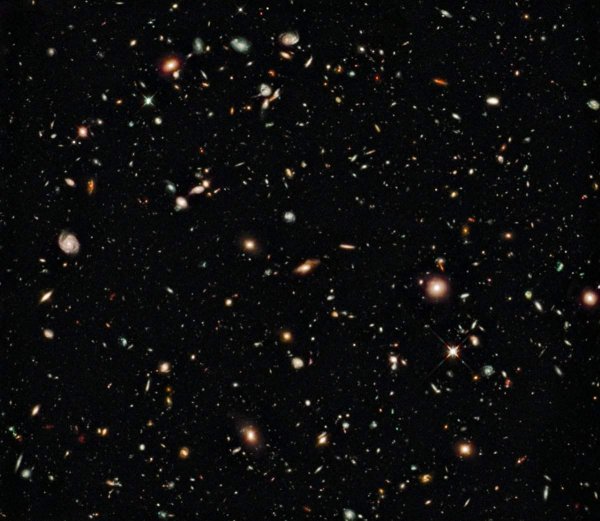
A century ago, astronomers first measured the Milky Way’s scale and were stunned by its size. The idea that spiral nebulae might be “island universes” as large as our galaxy was met with skepticism. Today, we know our nearest galactic neighbor is about 2 million light-years away, and the most distant galaxies we observe have sent their light traveling for nearly 13 billion years.
The universe has been expanding since the Big Bang, a fact established in the 1920s. About 20 years ago, astronomers discovered that this expansion is accelerating, driven by an unknown force called dark energy. This phenomenon operates on cosmic scales, posing a unique challenge for storytellers trying to incorporate it into narrative.
Beyond the observable universe, our simplest models suggest the universe extends infinitely, or that our Big Bang is one of many in a multiverse. As Neil deGrasse Tyson once said, “The Universe is under no obligation to make sense to you.” That sentiment applies equally to science fiction writers, who must balance human-scale emotions with cosmic enormity.
The Human Need for a Cosmic Perspective
Olaf Stapledon’s 1937 novel Star Maker took on this challenge by imagining a conscious cosmos. While we are humbled by our smallness, our brains can still grasp, to some extent, the universe’s scale. As astrobiologist Caleb Scharf of Columbia University put it, “In a finite world, a cosmic perspective isn’t a luxury, it is a necessity.” Conveying that perspective to the public is a shared challenge for astronomers and science fiction writers alike.
This reflection draws on insights from the book Welcome to the Universe: An Astrophysical Tour by Michael Strauss, Neil deGrasse Tyson, and J. Richard Gott, published by Princeton University Press. The article originally appeared at Aeon and is republished under Creative Commons.