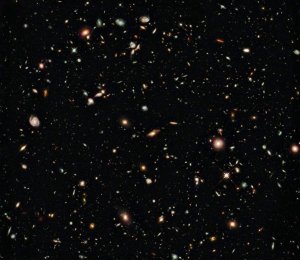
Why the Universe’s Scale Defies Human Imagination: An Astrophysicist’s View
An astrophysicist explores why the universe’s vastness is so hard to grasp, using everyday comparisons and cosmic milestones. From Earth’s diameter to the multiverse, the article underscores the challenge of conveying such scale in science fiction and public understanding.

Nanotech-Enhanced Graft Material Shows Promise for ACL Repair
Researchers are developing a new ACL replacement using polyester fibers and calcium nanocrystals, offering a potential alternative to autografts. The material's antioxidant and porous properties may promote healing, though human trials are still needed.
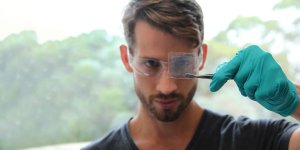
Australian Scientists Unveil Affordable Graphene Filter to Purify Water in One Pass
Researchers at Australia's CSIRO have developed a graphene-based membrane named Graphair that can turn contaminated water into potable water in a single filtration step, using a renewable soybean oil component. The technology aims to provide a low-cost, practical solution for the 2 billion people worldwide who rely on fecally contaminated drinking water, potentially reducing the annual 502,000 deaths from diarrheal diseases.
Sri Lanka's Coastline Choked by Toxic Plastic Pellets After Ship Fire
A fire aboard the MV X-Press Pearl off Sri Lanka's coast has blanketed beaches in toxic plastic pellets, sparking fears of long-term ecological damage. The spill, which includes 78 metric tons of pellets, threatens marine ecosystems and local livelihoods.
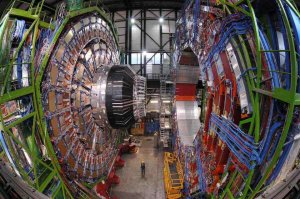
The Higgs Field and Boson: A 1964 Idea That Took Decades to Confirm
The Higgs field and boson, first theorized in 1964, explain why particles have mass. After decades of searching, CERN confirmed the boson in 2013, completing a key piece of the Standard Model. This article traces the discovery's history and its implications for our existence.
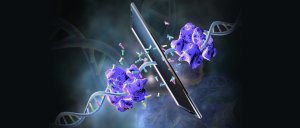
Chinese Researchers Craft Mirror-Image Polymerase, Paving Way for Synthetic Life
Scientists at Tsinghua University have synthesized a mirror-image polymerase enzyme, a key step toward creating synthetic organisms with reversed biochemistry. This breakthrough could lead to medical applications with biomolecules resistant to viruses and bacteria.
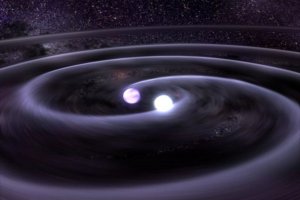
Gravitational Wave Detectors Set to Transform Astronomy and Cosmology
Following the first direct detections of gravitational waves in 2015, scientists anticipate a new era of discovery. With LIGO and Virgo reaching full sensitivity, researchers expect to observe dozens to hundreds of black hole mergers annually, potentially unlocking mysteries about neutron stars, supernovae, and the universe's expansion.

Solar Paint Technology Promises to Turn Homes Into Power Stations
Researchers are developing a photovoltaic paint that can be applied to building surfaces, potentially turning any house into a solar power generator. The technology, still in early stages, could reshape how homes and buildings produce clean energy.
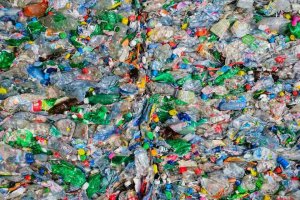
Scottish Startup Turns Plastic Waste into Durable Road Surfaces
A Scottish startup founded by engineer Toby McCartney has developed a method to incorporate recycled plastic into asphalt, reducing the need for oil-based bitumen. The resulting roads are reportedly cheaper and longer-lasting, and two English councils have already adopted the technique.

Global Push Against Single-Use Plastics Gains Momentum
Governments and companies worldwide are intensifying efforts to curb plastic waste, with the EU targeting fully reusable or recyclable packaging by 2030 and nearly 200 countries backing a UN resolution against ocean plastic. Industry moves, such as Wagamama's straw phase-out and Iceland's packaging overhaul, reflect a broader shift toward sustainable alternatives.

28-Pound Deer Stands Its Ground Against 3,400-Pound Rhino in Polish Zoo
A viral video from Wroclaw Zoo in Poland captures a 28-pound Reeves's muntjac named Tata charging at a 1.7-ton female rhino, Maruśka. The confrontation, which the zoo described as a display of the deer's territorial instincts, ended with the tiny deer apparently winning the standoff. Zookeepers note that such interactions are common and non-threatening.

Atomic-Scale Motor Built by Dublin Physicists Could Power Future Nanotech
Researchers at Trinity College Dublin have engineered a motor no larger than a single calcium ion, roughly ten billion times smaller than a car engine. The device converts laser heat into vibrations, enabling measurement of energy at the quantum scale. This breakthrough could underpin future nanotechnologies.
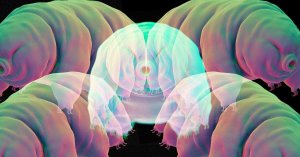
Tardigrade Qubit Experiment Stirs Quantum Entanglement Debate
A preprint claims researchers entangled a frozen tardigrade with a superconducting qubit, but physicists argue the effect is merely electromagnetic, not quantum. The debate highlights the challenges of interpreting biological experiments in quantum contexts.

Record Share of Americans Now Accept Climate Change Reality
A new survey from Yale and George Mason universities finds that 73% of Americans now believe global warming is happening, the highest level ever recorded. Concern about climate impacts has also risen, with 69% expressing worry, up from 61% in March 2018.

Atlantic Current System Nears Tipping Point, Study Warns
New research indicates the Atlantic Meridional Overturning Circulation (AMOC), which drives the Gulf Stream, is approaching a critical threshold. If it collapses, parts of North America and Europe could face severe cooling for centuries, echoing the 2004 film 'The Day After Tomorrow'.

Global Ocean Heat Sets New Records, Raising Alarms Among Researchers
Global ocean surface temperatures reached unprecedented highs last month, surpassing previous records set in 2023 and 2024. Scientists warn that the combination of climate change and an emerging El Niño event could lead to further temperature extremes in the coming months.

Heat-Tolerant Microbe Found in California Hot Springs Sets New Eukaryote Record
Researchers have discovered a single-celled organism in Lassen Volcanic National Park that can reproduce at 145.4°F, the highest temperature ever recorded for a complex cell. The find challenges assumptions about where eukaryotes can survive and hints at new possibilities for biotechnology and astrobiology.

Microplastics Linked to Bone Degeneration, New Analysis Shows
A new analysis of over 60 studies suggests microplastics may disrupt bone remodeling, leading to weaker bones and increased fracture risk. Researchers call for more investigation into this potential environmental risk factor for osteoporosis.
Independent Study Validates NOAA's Contested Climate Data Correction
A new analysis by UC Berkeley and Berkeley Earth researchers independently confirms NOAA's 2015 finding that the so-called global warming hiatus was an artifact of measurement biases. Using separate data from satellites, floats, and buoys, the study validates that ocean warming has continued at a steady rate, countering claims of a slowdown.

SpaceX Stock Slumps After ESG Rating Matches Kremlin's Low Score
SpaceX shares fell to about $167 on Monday, erasing post-IPO gains, after MSCI gave the company its lowest ESG rating, matching the Kremlin's score. Elon Musk dismissed the rating, while analysts highlight governance and controversy concerns.