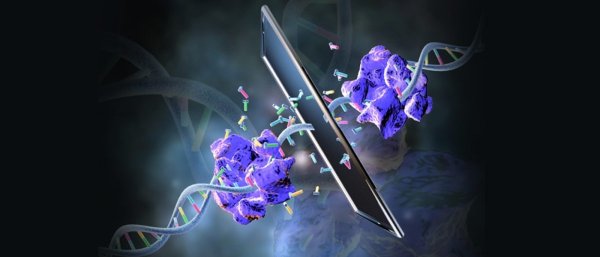
Researchers at Tsinghua University in Beijing have achieved a significant milestone in synthetic biology by creating a mirror-image polymerase enzyme, a development that brings the possibility of synthetic organisms with reversed biochemistry closer to reality. The team's work, which involved synthesizing a functional enzyme from right-handed amino acids, marks a crucial step toward building self-replicating life forms with a 'mirror' molecular structure.
Life's 'chirality,' or handedness, is a fundamental mystery. In all known terrestrial organisms, amino acids are left-handed, and DNA twists clockwise. This preference is so ingrained that molecules of opposite chirality are incompatible, much like a left-handed glove cannot fit a right hand. The origin of this bias remains unclear, with theories ranging from chance to the influence of the weak nuclear force during early evolution.
The Tsinghua team, led by researchers aiming to explore the possibilities of mirror-image biology, focused on creating a simplified version of a polymerase, an enzyme essential for DNA replication and transcription. They chose the smallest known polymerase, derived from the African swine fever virus, which typically contains over 600 amino acids. By synthesizing a 174-amino-acid version using right-handed amino acids, they successfully assembled a functional enzyme.
Although the mirror-image polymerase operates slowly, it demonstrated its capability by copying a 12-nucleotide template into an 18-nucleotide left-handed DNA strand within four hours. After 36 hours, it had assembled a 56-nucleotide strand. Remarkably, the enzyme also transcribed the mirror DNA into mirror RNA, an essential step toward creating a functioning organism with reversed biochemistry.
Potential Medical Applications
The creation of mirror-image biomolecules holds promise for medical applications. Enzymes and other biomolecules with opposite chirality could be synthesized to resist attack by viruses or be immune to the biochemical processes of ordinary bacteria. This could lead to new therapeutic agents that are more stable and less susceptible to degradation.
However, the path to constructing a full mirror-image organism remains daunting. To translate mirror RNA into mirror proteins, a ribosome is required—a complex molecular machine. Building a mirror-image ribosome is a formidable challenge, and researchers caution that the appearance of mirror-image animals or humans is not imminent.
The Tsinghua study, published in a peer-reviewed journal, represents a foundational advance in synthetic biology. While the immediate goal is to understand the principles of reverse biochemistry, the long-term implications for medicine and biotechnology are profound.