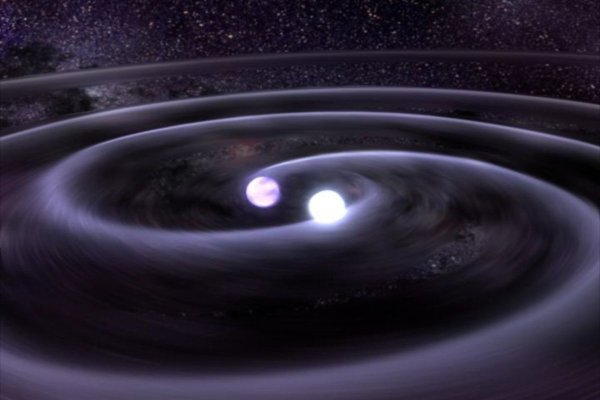
In September 2015, scientists detected ripples in spacetime for the first time, confirming a century-old prediction of Einstein's general relativity. Now, with the LIGO and Virgo observatories poised to reach their full potential, researchers expect a flood of new signals that could reshape our understanding of the cosmos.
The initial detection, made on September 14, 2015, and a second on December 26, 2015, already doubled the known population of stellar-mass black holes and proved that such objects can form tight binaries and merge within the universe's lifetime. These events have also allowed physicists to test general relativity in extreme conditions far beyond our solar system, and the unexpectedly high merger rate has sparked speculation that black holes might even constitute a form of dark matter.
But the most profound discoveries, scientists say, are likely to be the ones no one predicts. As the detectors improve, the gravitational universe will reveal itself in ways that could answer long-standing questions about the most extreme objects in existence.
Black Hole Census and Neutron Star Collisions
At current sensitivity, LIGO's two facilities in Louisiana and Washington state, along with Virgo near Pisa, Italy, are about one-third as sensitive as their design targets. Once fully upgraded, they are expected to register anywhere from dozens to hundreds of black hole mergers each year. That wealth of data will enable astronomers to map the black hole population across the universe, testing theories of how these objects form.
Beyond black holes, the detectors are poised to catch mergers of neutron stars—the ultra-dense remnants of stars too small to become black holes. A neutron star packs more mass than the Sun into a sphere the size of Manhattan, with magnetic fields billions of times stronger than Earth's. Their internal physics remains poorly understood, but gravitational waves from neutron star collisions will offer an unobstructed view of these interactions for the first time.
Unlike black holes, neutron stars emit light and other radiation. When they merge, they can produce a flash of gamma rays or X-rays, followed by a faint optical afterglow lasting days or weeks. With LIGO and Virgo working together, astronomers can pinpoint the location of such mergers to within a few degrees on the sky, allowing optical telescopes to search for the radioactive glow of ejected material. This combined observation could solve mysteries such as the origin of short gamma-ray bursts and the production of heavy elements like gold.
Supernovae, Cosmology, and a Cosmic Hum
Gravitational waves could also illuminate the inner workings of core-collapse supernovae, which occur when a massive star's core collapses. The explosion mechanism is hidden deep inside the star, but gravitational waves travel unimpeded from the core to detectors. However, such supernovae are rare—the last nearby one was in 1987, and the last in our galaxy occurred 400 years ago—so patience will be required.
On a larger scale, gravitational waves from neutron star mergers offer a new way to measure the universe's expansion. By comparing the signal's amplitude (which gives distance) with the redshift of the optical counterpart, scientists can independently calculate the Hubble constant, providing a crucial check on cosmological models that rely on supernova observations.
Finally, the detectors might pick up a faint background hum of gravitational waves permeating all of space. This could arise from the accumulation of astrophysical events like black hole mergers or from an episode of rapid cosmic inflation just after the Big Bang. A detectable hum would be a major achievement, potentially revealing conditions in the early universe.
For now, progress is limited by detector sensitivity. Each upgrade is expected to unveil new types of sources. Eventually, with substantial international investment, the field could be limited only by the universe's willingness to provide rare signals.
The September 14 event itself was a staggering feat: two objects, each about 35 times the Sun's mass, orbited each other 50 times per second in a decaying orbit the size of Switzerland, briefly emitting more energy than all the starlight in the observable universe—yet the signal reaching Earth was incredibly faint. As gravitational wave detections become routine, the invisible shaking of space will illuminate parts of the universe that have remained dark until now.
This article was originally published at Aeon and has been republished under Creative Commons.