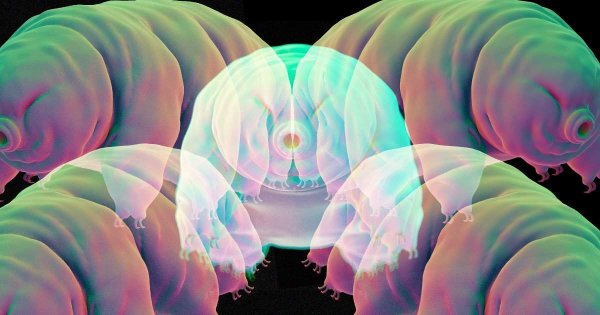
In a development that blurs the line between biology and quantum mechanics, an international team of researchers has reported entangling a frozen tardigrade with a superconducting circuit. The claim, posted as a preprint and not yet peer-reviewed, has drawn immediate skepticism from physicists who argue the observed effect is classical electromagnetism, not quantum entanglement.
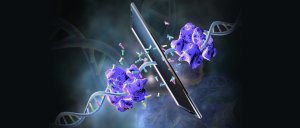
The experiment, detailed in a paper by scientists from Europe and Asia, involved placing a tardigrade—a microscopic animal renowned for surviving extreme conditions—between the capacitor plates of a superconducting circuit. This configuration formed a qubit, the quantum analog of a classical bit. When the tardigrade made contact, the qubit's frequency shifted. The team then placed this circuit near a second superconducting circuit and observed that the frequencies of both qubits and the tardigrade changed in tandem, which they interpret as a sign of entanglement.
Quantum entanglement, a phenomenon Albert Einstein famously called "spooky action at a distance," occurs when particles become correlated such that the state of one instantly influences the other, regardless of distance. The researchers suggest their work represents "the closest realization combining biological matter and quantum matter available with present-day technology," and they emphasize that the tardigrade retained biological functionality after the experiment.
However, the scientific community has responded with caution. Physicist and science writer Ben Brubaker tweeted that the qubit is an electrical circuit, and placing the tardigrade next to it affects it through well-understood electromagnetic laws. "Putting a speck of dust next to the qubit would have a similar effect," he noted. Douglas Natelson, chair of physics and astronomy at Rice University in Texas, echoed this in a blog post titled "no, a tardigrade was not meaningfully entangled with a qubit." He explained that the tardigrade, being mostly frozen water, acts as a dielectric, shifting the resonance frequency of the qubit it sits on, which is a classical effect.
Why the Tardigrade's Survival Matters
The researchers harvested three tardigrades from a roof gutter in Denmark. Only one survived the experiment, reviving after being warmed back up 17 days later. This detail underscores the hardiness of tardigrades, but it does not, according to critics, validate the entanglement claim.
The preprint has not been peer-reviewed, and the debate highlights the challenges of applying quantum concepts to complex biological systems. While the authors see their work as a step toward integrating living organisms into quantum technologies, skeptics argue that the results can be explained by classical physics.
As the scientific community digests the findings, the episode serves as a reminder of the rigorous standards required to claim quantum effects, especially when they involve macroscopic biological entities.