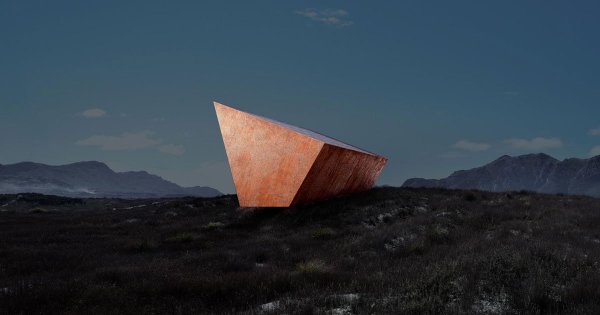
In a remote corner of Tasmania, construction is underway on a project that aims to answer a haunting question: if human civilization collapses due to climate change, what evidence of our existence and our failures will remain? The answer, according to a team of researchers and creatives, is a massive steel monolith called Earth's Black Box. Designed to withstand the ages, this structure will continuously record climate data and societal reactions, creating a time capsule for any future civilization that might stumble upon it.
The initiative is a collaboration between the University of Tasmania, the marketing agency Clemenger BBDO, and the creative collective The Glue Society. Jim Curtis, executive creative director at Clemenger BBDO, explained to the Australian Broadcasting Corporation (ABC) that the box is intended to serve as a planetary-scale flight recorder. "The idea is if the Earth does crash as a result of climate change, this indestructible recording device will be there for whoever's left to learn from that," he said.
The box itself is an engineering feat: three-inch-thick steel walls cantilevered off a granite base, with a roof covered in solar panels that power an array of internet-connected storage drives inside. Jonathan Kneebone, cofounder of The Glue Society, told ABC that the structure is "built to outlive us all," adding that even if power grids fail, the box will continue to function. The choice of Tasmania as the site is deliberate—its relative isolation and geological stability offer a higher chance of preservation.
What Will It Record?
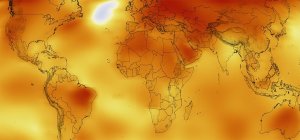
The data collection is already underway, even as the physical structure nears completion. The box will track atmospheric CO2 levels, sea temperatures, and energy consumption, alongside contextual information such as news headlines and social media posts. This dual approach aims to capture not just the physical changes but also the human narrative—how societies responded, debated, and ultimately failed to avert catastrophe.
The project draws a direct analogy to the black boxes used in aviation, which survive crashes to provide investigators with crucial data. Earth's Black Box is designed to do the same on a planetary scale, offering future generations a detailed account of the events leading up to our potential downfall.
The Challenge of Access
One of the most pressing issues for the team is ensuring that future civilizations can actually retrieve and interpret the data. A mysterious monolith in the wilderness might be discovered, but without a user manual, the information could remain inaccessible. The team is exploring ways to make the data readable, though the task is complex. As Kneebone noted, the box will be there, but the challenge lies in making its contents useful.
The project has sparked broader conversations about humanity's legacy and the importance of documenting our impact on the planet. While some might see it as a doomsday prepper's fantasy, the creators frame it as a sobering reminder of the stakes. It is a passive witness, not an active solution—a silent sentinel that will keep recording regardless of what happens to us.
As the world continues to grapple with climate change, Earth's Black Box stands as a stark symbol of our current trajectory. It is not a tool for prevention but a testament to our actions, waiting to tell our story to whoever—or whatever—comes next.