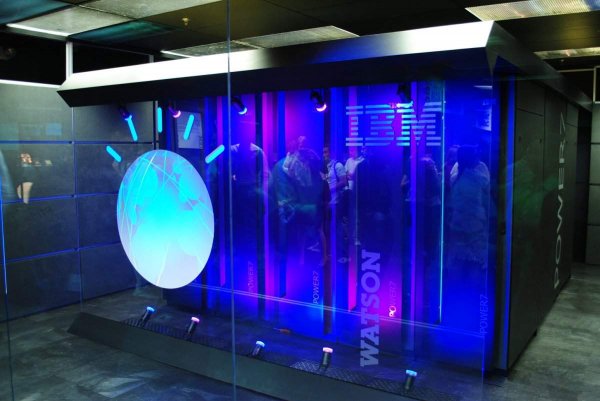
Researchers at the Georgia Institute of Technology are pushing the boundaries of artificial intelligence by teaching IBM's Watson system to answer research questions directly, rather than merely returning a list of links. The team has fed Watson several hundred biology articles from Biologue, an interactive biology repository, and is now testing its ability to provide concise, accurate responses.
The project, dubbed GT-Watson Plus, represents a shift in how AI can assist in research. Traditional search engines like Google return a variety of links, some of which may be irrelevant or incorrect. The Georgia Tech team aims to create a system that can parse the information and deliver a direct answer, saving time and reducing the risk of misinformation.
In one demonstration, the researchers asked Watson, "How can manufacturers develop better solar cells for long-term space travel?" The system responded by discussing the need to replicate the way plants in harsh climates use high-temperature fibrous insulation material to regulate temperature. This answer, drawn from the Biologue articles, illustrates Watson's ability to synthesize information from multiple sources and provide a coherent response.
According to a press release from Georgia Tech, Watson effectively acted as an "intelligent sounding board" to guide students through the daunting task of parsing a wide volume of research that may fall outside their expertise. The system can select answers from Biologue in a fraction of a second, a speed that could be transformative for professionals who need quick, reliable information.
Potential Applications Beyond Biology
The implications of this technology extend beyond biology. The researchers believe that GT-Watson Plus could assist professionals in various fields by allowing them to ask questions and receive answers quickly, instead of spending hours on research. The system also prompts users with alternative ways to phrase their questions, improving the accuracy of the results.
The team plans to continue working with Watson, exploring other areas such as online learning and healthcare. These fields could benefit from Watson's ability to process vast amounts of data and provide answers in natural language, making complex information more accessible to non-experts.
While the technology is still in its early stages, the work at Georgia Tech demonstrates the potential of cognitive systems like Watson to enhance human expertise. By providing direct answers to complex questions, such systems could change the way we approach research and learning.