In a blind comparison, members of the public favored paintings generated by an artificial intelligence system over those created by human artists, rating the machine-made works as more novel, complex, and inspiring. The experiment, conducted by a team of scientists, used a generative adversarial network (GAN) trained on 81,500 example paintings spanning styles from Baroque to Modernism.
Unlike earlier AI art projects that merely remix or filter existing images, this system was programmed to push beyond established categories. The generator was instructed to maximize deviation from known artistic styles while still staying within the broad distribution of what constitutes art, according to the study's abstract. The result is a body of work that is not a copy or a manipulation, but something new.
Mark Riedl, an associate professor at the Georgia Institute of Technology in Atlanta, praised the approach. “This is the first paper I’ve seen that pushes GANs out of their comfort zone,” he said, referring to the technique of forcing the network to avoid replicating preexisting styles.
How the GAN Works
The system pairs two neural networks: a generator that produces images and a discriminator that evaluates them. The generator creates a candidate painting; the discriminator critiques it; the back-and-forth continues until the output meets the criteria. By tweaking the training objective, the scientists ensured the final works were both original and recognizably art.
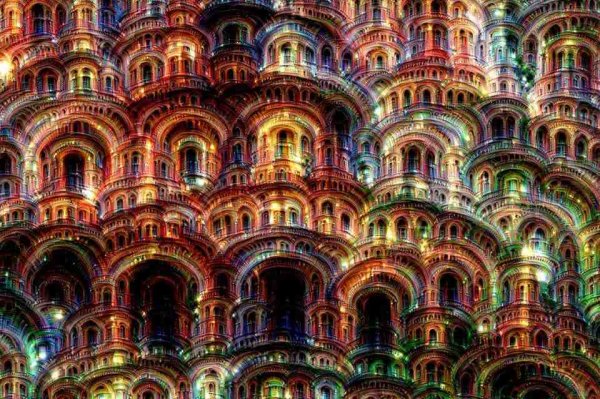
This approach differs from Google's Deep Dream, which processes and alters existing images in psychedelic ways. The new system generates originals from scratch, similar to Aiva, an AI composer whose musical pieces were also indistinguishable from human compositions in listening tests.
The public survey mixed the AI-generated paintings with human-made works, and respondents consistently preferred the AI pieces. The findings suggest that the perceived novelty and complexity of the machine's output resonated more strongly with viewers than traditional human artistry.
A Historical Echo
The idea of technology transforming art is not new. In 1931, French poet Paul Valéry wrote, “We must expect great innovations to transform the entire technique of the arts, thereby affecting artistic invention itself and perhaps even bringing about an amazing change in our very notion of art.” His words, later cited by Walter Benjamin in his 1936 essay “The Work of Art in the Age of Mechanical Reproduction,” anticipated the current moment.
Benjamin argued that even the most perfect reproduction of a work of art lacks “its presence in time and space, its unique existence at the place where it happens to be.” The new AI system, by generating original pieces rather than reproducing existing ones, preserves that uniqueness. Each output is a one-of-a-kind creation, not a copy.
Elon Musk has predicted that AI will exceed humans at everything by 2030. While that timeline is debatable, this study demonstrates that the creative domain—long considered a bastion of human uniqueness—is no longer off limits. The question is not whether machines can make art, but how soon they might surpass the Picassos of the world—and, being digital, they could do so forever.