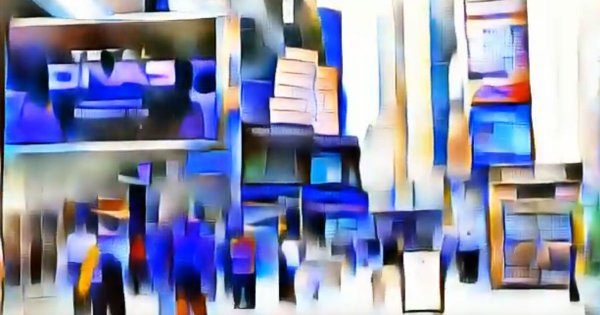
Artificial intelligence has taken a familiar scene of New York City's Times Square and turned it into a visual whirlwind of geometric shapes and vivid colors, echoing the style of a 20th-century cubist master. A video posted Tuesday on YouTube by the channel Matchue demonstrates how a deepfake-generating tool can reinterpret real-world footage, transforming pedestrians, vehicles, and skyscrapers into a disjointed, blocky tableau.
The clip, which has already sparked conversations among digital art enthusiasts, uses a technique called style transfer. This method merges two inputs: the content of the original video—Manhattan's bustling streets—and the visual style of Carlos Merida's 1982 painting, “A hymn to the Shulamite.” The result is a hybrid that retains the motion of the city while overlaying the painting's cubist aesthetic, creating an effect that some viewers have likened to a retro video game rendering.
While the project is framed as a playful art experiment, it underscores a broader trend in AI development: algorithms are becoming increasingly adept at interpreting and manipulating real-world footage. The ability to apply artistic styles to video in real time has implications beyond aesthetics, potentially affecting fields such as filmmaking, advertising, and even surveillance, where such techniques could be used to alter or anonymize visual data.
How Style Transfer Works
Style transfer operates by separating the content of an image or video from its stylistic elements. In this case, the algorithm analyzed the structural elements of the New York footage—such as the layout of buildings and the movement of people—and then applied the color palette, brushstroke patterns, and geometric distortions of Merida's painting. The output is a seamless blend that preserves the original scene's dynamics while giving it a completely new visual identity.
The video's description explains the process, noting that the technique takes the content from the former and the style of the latter to create a new hybrid. This approach, which has been used in various AI art projects, is part of a larger field of research into generative adversarial networks (GANs) and other deep learning models that can create or modify visual content.
Matchue, the channel behind the video, is known for tinkering with AI tools and sharing experimental results. While the project is not the first to apply style transfer to video, it stands out for its choice of source material—a bustling urban environment—and the striking contrast between the original footage and the cubist reinterpretation.
As AI continues to evolve, projects like this offer a glimpse into how machines are learning to see and recreate the world. They also raise questions about the authenticity of visual media, as the line between real and generated content becomes increasingly blurred. For now, the video serves as a testament to the creative potential of AI, turning a familiar cityscape into a canvas for algorithmic imagination.