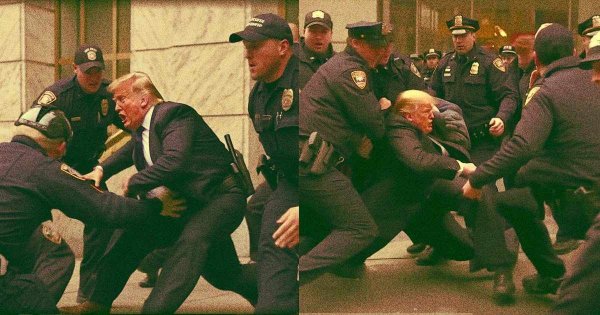
In a striking example of how synthetic media can blur the line between fact and fiction, fabricated images purporting to show former President Donald Trump being taken into custody have gone viral on social media—this despite no arrest having occurred and no formal charges being filed in the case that has sparked the speculation.
The images, which began circulating widely in recent days, coincide with the release of the latest version of Midjourney, a popular AI image generator. Users have been quick to share the doctored visuals, often without labeling them as artificial, leading to confusion among viewers who may not immediately recognize the telltale signs of machine-generated content.
Among those who have experimented with the technology is Eliot Higgins, founder of the investigative journalism collective Bellingcat. Higgins told The Daily Beast that he prompted the AI to create an "entirely fictional" perp walk of Trump, and the resulting images bear a striking resemblance to the other phony visuals being shared online. His comments highlight the ease with which such tools can produce convincing—but entirely fabricated—scenes.
Joan Donovan, a misinformation researcher at Harvard, described the phenomenon as a new form of "anticipatory disinformation." In an interview with The Daily Beast, she explained that "rumors are made into reality through the creation of media covering events that never happened." Her assessment underscores a growing concern among experts that the public is increasingly vulnerable to visual hoaxes, particularly when they align with pre-existing beliefs or expectations.
Why This Matters
The spread of these images is not merely a curiosity; it reflects a broader trend in which AI-generated content is becoming more sophisticated and harder to detect. While close inspection of the Trump arrest images reveals subtle anomalies—such as distorted hands or unnatural lighting—casual viewers, especially those emotionally invested in the story, may overlook these clues.
The Pentagon flagged AI-generated deepfakes as a national security concern as early as 2019, even as it developed its own applications for the technology. Since then, the capabilities of consumer-grade tools like Midjourney have advanced rapidly, making it easier for individuals to create realistic but false imagery without specialized skills.
The current episode also intersects with real-world legal developments. Reports have suggested that Trump could face charges related to hush-money payments made to adult film actress Stormy Daniels, though no indictment has been announced. The anticipation of such a move appears to have fueled the creation and sharing of the fake arrest images.
Experts caution that while today's AI-generated images can often be debunked by trained analysts, the pace of technological improvement may soon outstrip the average person's ability to distinguish real from fake. The question, they say, is not whether such disinformation will continue, but how society will adapt to a reality where seeing is no longer believing.