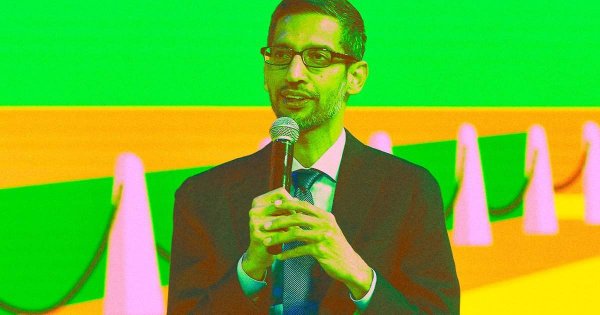
Google CEO Sundar Pichai has confirmed that the tech giant will integrate AI chatbot capabilities into its flagship search engine, a strategic shift aimed at countering the growing popularity of conversational AI tools like Microsoft's Bing. The announcement, reported by The Wall Street Journal, signals a major pivot for a company that has long dominated traditional web search but has been perceived as trailing in the AI chatbot race.
Pichai dismissed concerns that AI chatbots could disrupt Google's core business, stating that the opportunity space is "bigger than before." He revealed that Google is experimenting with multiple versions of a search-integrated chatbot that would allow users to ask follow-up questions, similar to the functionality offered by Bing's AI. "Will people be able to ask questions to Google and engage with LLMs in the context of search? Absolutely," Pichai told the WSJ.
The move comes as Google faces mounting pressure from investors and competitors. Microsoft, which has partnered with OpenAI to power its Bing AI with the same large language model behind ChatGPT, has gained significant attention and praise for its early lead in AI-enhanced search. This is a notable reversal of fortunes, as Bing has historically lagged far behind Google Search, which commands nearly 90% of the global search market.
Google's own AI chatbot, Bard, was released earlier this year, but it has yet to achieve the same level of traction as ChatGPT or Bing AI. The company is now looking to leverage its existing search infrastructure to integrate AI more deeply, potentially reshaping how users interact with the platform.
Financial Pressures and Layoffs
Google's AI push is occurring against a backdrop of significant cost-cutting. In January, the company announced it would lay off 12,000 workers, roughly 6% of its workforce, citing overhiring during the pandemic-driven remote work boom. Pichai emphasized the need for "durable savings," telling the WSJ that while progress has been made, "there is more work left to do."
These spending cuts could affect Google's computing infrastructure, which is critical for running resource-intensive AI models. The company will need to balance cost reductions with the substantial investments required to compete effectively in AI search.
Industry observers note that Google's entry into AI-powered search could intensify competition in the sector, potentially leading to more innovative features for users. However, the company faces the challenge of integrating AI without compromising the reliability and speed that have made its search engine the default choice for billions of users worldwide.
As the AI search race heats up, all eyes will be on Google's next steps. The company has not provided a timeline for the rollout of its search chatbot, but Pichai's comments suggest that it is a priority. For now, the battle for AI search supremacy is far from over, with Google and Microsoft both vying for dominance in a rapidly evolving landscape.