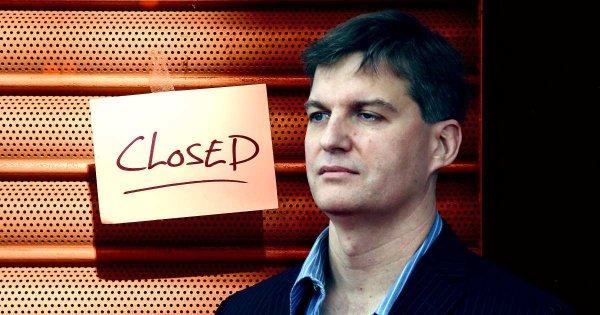
Michael Burry, the investor who gained fame for betting against the U.S. housing market in 2008, is closing his hedge fund, Scion Asset Management, according to an investor letter dated October 27. The decision comes just weeks after it was revealed that Burry had taken short positions worth over $1 billion against AI chipmaker Nvidia and software firm Palantir.
The letter, which was sent to investors roughly a month after the short positions were made public, stated that Burry would "liquidate the funds" and "return capital" by the end of the year. This announcement coincided with the termination of Scion's registration with the U.S. Securities and Exchange Commission (SEC), fueling speculation that Burry was stepping away from the market.
However, as Reuters noted, deregistering with the SEC does not necessarily mean the fund is shutting down entirely. It simply relieves Scion of the obligation to file regular reports with the regulator or any U.S. state.
Timing and Market Conditions
In his letter, Burry hinted that his timing may have been off. Short sellers have faced a challenging year as AI company valuations continue to climb despite a notable tech selloff earlier this month. Nvidia's stock is up over 37% year-to-date, while Palantir has surged 126%, reaching a price-to-earnings ratio of over 200. These gains have eclipsed the companies' actual revenues by a widening margin, which some analysts view as a sign of an overheating market.
Burry is not the first prominent short seller to retreat under these conditions. According to the Financial Times, traders like Jim Chanos and Nate Anderson have also closed their funds in the face of persistent AI hype.
In the letter, Burry wrote, "My estimation of value in securities is not now, and has not been for some time, in sync with the markets."
Clarifying the Short Position
Adding to the confusion surrounding his strategy, Burry took to social media on Wednesday to correct media reports about the scale of his bet against Palantir. He stated that he had spent $9.2 million, not $912 million, on put options. "Each of those doodads let me sell [Palantir] at $50 in 2027," he explained.
This clarification has led to questions about whether Burry's original position was as large as initially reported, and what his current exposure to AI stocks might be.
What's Next for Burry?
In a cryptic tweet, Burry wrote that he would be "on to much better things November 25," without providing further details. This has fueled speculation that he may continue his bearish bets on AI through private investments, avoiding the regulatory oversight that comes with running a registered hedge fund.
Bruno Schneller of Erlen Capital Management told CNBC, "Don't count him out, just expect him to operate off the grid for a while. He may simply pivot to a family-office setup and run his own capital."
Burry's recent social media activity, including a photo of actor Christian Bale, who portrayed him in the film "The Big Short," with the caption "Me then, me now," and the words "It worked out. It will work out," suggests he remains confident in his investment philosophy, even as he winds down his fund.
The closure of Scion Asset Management marks the end of an era for one of the most closely watched investors in the market. Whether Burry will reappear in a new capacity remains to be seen, but his actions continue to draw attention to the ongoing debate over AI stock valuations.