Nanotech-Enhanced Graft Material Shows Promise for ACL Repair
Researchers are developing a new ACL replacement using polyester fibers and calcium nanocrystals, offering a potential alternative to autografts. The material's antioxidant and porous properties may promote healing, though human trials are still needed.

Global Push Against Single-Use Plastics Gains Momentum
Governments and companies worldwide are intensifying efforts to curb plastic waste, with the EU targeting fully reusable or recyclable packaging by 2030 and nearly 200 countries backing a UN resolution against ocean plastic. Industry moves, such as Wagamama's straw phase-out and Iceland's packaging overhaul, reflect a broader shift toward sustainable alternatives.

Chinese Researchers Craft Mirror-Image Polymerase, Paving Way for Synthetic Life
Scientists at Tsinghua University have synthesized a mirror-image polymerase enzyme, a key step toward creating synthetic organisms with reversed biochemistry. This breakthrough could lead to medical applications with biomolecules resistant to viruses and bacteria.

Solar Paint Technology Promises to Turn Homes Into Power Stations
Researchers are developing a photovoltaic paint that can be applied to building surfaces, potentially turning any house into a solar power generator. The technology, still in early stages, could reshape how homes and buildings produce clean energy.

Heat-Tolerant Microbe Found in California Hot Springs Sets New Eukaryote Record
Researchers have discovered a single-celled organism in Lassen Volcanic National Park that can reproduce at 145.4°F, the highest temperature ever recorded for a complex cell. The find challenges assumptions about where eukaryotes can survive and hints at new possibilities for biotechnology and astrobiology.
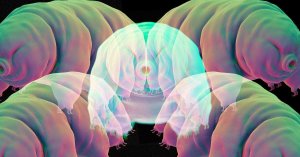
Tardigrade Qubit Experiment Stirs Quantum Entanglement Debate
A preprint claims researchers entangled a frozen tardigrade with a superconducting qubit, but physicists argue the effect is merely electromagnetic, not quantum. The debate highlights the challenges of interpreting biological experiments in quantum contexts.

SpaceX Stock Slumps After ESG Rating Matches Kremlin's Low Score
SpaceX shares fell to about $167 on Monday, erasing post-IPO gains, after MSCI gave the company its lowest ESG rating, matching the Kremlin's score. Elon Musk dismissed the rating, while analysts highlight governance and controversy concerns.

Army Seeks Automated Tank Targeting System to Speed Combat Decisions
The U.S. Army has requested expert input to develop a system that would automate target detection and engagement in ground combat vehicles, though a human would still authorize firing. The move intensifies debate over autonomous weapons, with 26 countries calling for a ban.

Altering DNA of Crops and Livestock Emerges as Climate Strategy
A new report from the Information Technology & Innovation Foundation proposes using gene editing on plants and animals to reduce emissions and capture carbon. The approach faces uncertainty due to limited knowledge of long-term effects, but offers a potential complement to traditional geoengineering.
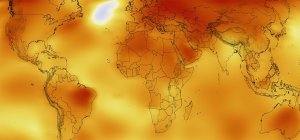
Why Knowing Climate Science Doesn't Bridge the Partisan Divide
A Yale-led study reveals that higher climate science literacy does not reduce political polarization over human-caused global warming. In fact, the most knowledgeable participants were the most divided, suggesting that cultural identity, not knowledge, drives public opinion.

AI-Driven Search Redesign Puts News Publishers on Brink
Google's latest search redesign prioritizes AI-generated answers over traditional links, accelerating a decline in referral traffic to news sites. With studies showing significant drops in click-through rates and web visits, publishers face an existential threat as AI tools repurpose their content.

Microsoft CEO Warns Firms Against Outsourcing AI Reasoning
Microsoft CEO Satya Nadella cautions that companies relying on third-party AI models without retaining control over their data risk losing their competitive edge. He recommends using AI gateways and open-weight models to keep proprietary information in-house, a stance that also aligns with Microsoft's cloud business interests.
Google Tightens Scrutiny on AI Content in Sensitive Sectors
Google has announced that it will apply stricter quality checks to AI-generated content in health, civic, and financial topics, citing the risk of misinformation. The company emphasizes that its systems prioritize reliable sources over the method of content production, though concerns remain about the accuracy of AI tools in these areas.

Fake AI Images of Trump Arrest Flood Social Media Ahead of Any Indictment
As speculation swirls over a possible indictment of former President Donald Trump, social media users are circulating AI-generated images depicting his arrest—images that experts say are fabricated. The trend highlights the growing challenge of 'anticipatory disinformation' and the evolving power of image-generation tools.
Goldman Sachs Analyst Sees Echoes of Dot-Com Bust in AI Spending Spree
Goldman Sachs' top stock researcher warns that massive AI investments may not yield returns, drawing parallels to the dot-com crash. His June report has sparked concern among venture capitalists and industry leaders, who question whether current AI tools justify their costs.

BuzzFeed CEO Warns of AI's Threat to Human Agency After Years of AI Content
BuzzFeed CEO Jonah Peretti, who previously championed AI-generated content, now warns that AI is eroding human agency and fueling social discord. In a new blog post, he criticizes tech platforms for driving media toward manipulative content, while launching a new AI-powered social platform called BF Island.

Court Bars OpenAI from Questioning Musk on Drug Use in Trial
A federal judge in California has ruled that OpenAI's legal team cannot question Elon Musk about his alleged ketamine use during an upcoming trial over his lawsuit against the company. The judge deemed the topic irrelevant unless OpenAI can provide evidence of its mind-altering effects. Musk is seeking up to $134 billion in damages from OpenAI and Microsoft.

Viral AI Cover Reimagines Taylor Swift Hit in Johnny Cash's Voice
A Dallas musician's AI-generated cover of Taylor Swift's 'Blank Space' performed in the style of the late Johnny Cash has gone viral, sparking conversations about the ethics and creativity of voice cloning. The 53-second clip, posted on TikTok, has drawn widespread attention for its authentic sound despite Cash's death over two decades ago.

Google CEO Confirms AI Chatbot Integration in Search Engine
Google CEO Sundar Pichai announced plans to integrate AI chatbot features into the company's search engine, aiming to compete with Microsoft's Bing AI. The move comes as Google faces pressure from investors and rivals, alongside recent layoffs and cost-cutting measures.

AI Voice Cloning Scams Prompt Federal Alert as Fraudsters Target Families
The U.S. Federal Trade Commission has issued a consumer alert about scammers using AI voice-cloning tools to impersonate relatives and demand money. The agency warns that a short audio clip from social media is enough to mimic a loved one's voice, urging consumers to verify calls through known numbers. Recent cases in Canada highlight the growing threat, with eight seniors defrauded of $200,000 CAD in just three days.